

 Shop
ShopHow Kawaii Culture Reduces Stress and Boosts Mood
It’s not just cute. It’s science.
I used to think my obsession with cute things was a guilty pleasure. Something I had to hide behind a locked browser tab or whisper about only to other people who “got it.” Then 2020 happened, the world got objectively worse, and I found myself binge-watching Sanrio compilations at 2 AM just to feel something other than dread.
That was the year I stopped apologizing for the stuff that made me happy. And it was also the year I started digging into why certain aesthetics, certain colors, certain things made my brain go quiet. Turns out, kawaii culture isn’t just a vibe. It’s wired into how our brains process the world around us.
The Science Behind Cute Things
There’s actual research on this. Dr. Hiroshi Nittono at Osaka University ran a series of studies showing that looking at images of baby animals or cute characters actually improves fine motor performance and narrows attentional focus. That sounds boring on paper, but what it means in practice is that cute visuals make you more careful, more precise, and more present.
Think about that for a second. A Hello Kitty image doesn’t just make you smile. It changes how your brain allocates resources. You become more focused and less scattered. In a world designed to split your attention into a thousand pieces, that’s not nothing.
The mechanism is believed to be tied to the brain’s caregiving circuitry. When we see something that triggers a caretaking response, even if it’s a cartoon cat with no mouth, our dopamine system lights up. We feel a protective warmth that’s very similar to what parents feel toward their children. That warmth, researchers suggest, is the root of the emotional comfort we get from kawaii.
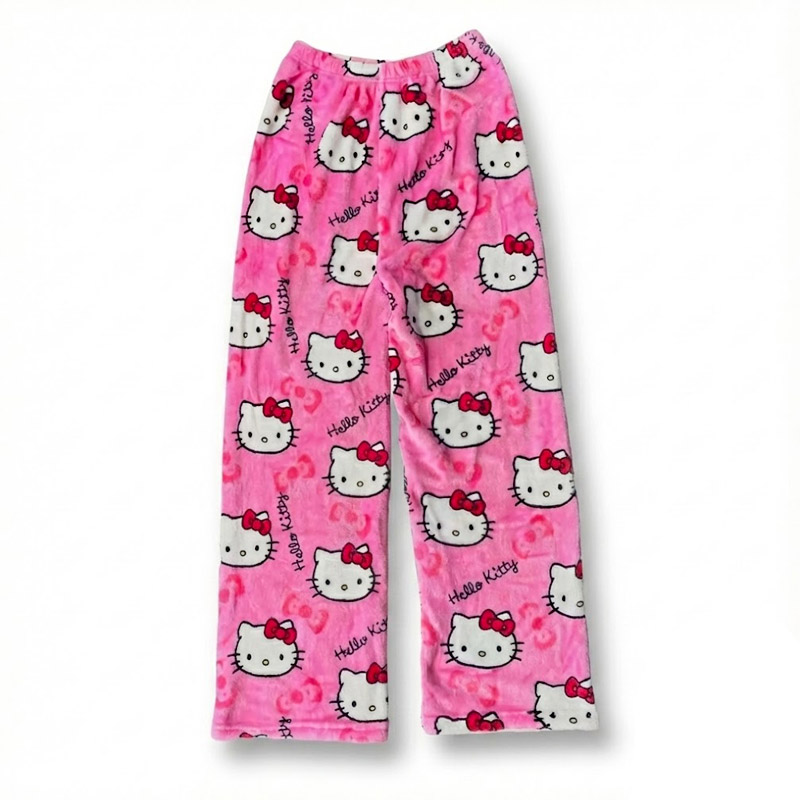
So when you slip into your Pink Hello Kitty Pajama Pants at the end of a terrible day and something in your chest loosens up, that’s not trivial. That’s your nervous system responding to a carefully designed aesthetic that activates genuine emotional relief.
Why Kawaii Works When Nothing Else Does
Here’s what I notice when I talk to other adult fans of kawaii. There’s a specific moment when it helps, and it’s rarely when things are going well. It’s the moment when you’ve been overstimulated all day, your mind is running in circles, and nothing feels good. Not your dinner, not your TV show, not your bed. Everything is just… flat.
Kawaii cuts through that flatness. And I think the reason is that it bypasses our rational brain entirely. You don’t evaluate whether Hello Kitty is beautiful in the way you’d evaluate a sunset. You just feel something immediate and warm, like catching a whiff of your childhood bedroom. It’s pre-verbal. It hits before your analytical brain can even form an opinion.
This is also why kawaii culture resonates so strongly with people who deal with anxiety. Anxiety is, at its core, an overactive threat-detection system. Your brain is scanning for danger constantly, even when there isn’t any. Kawaii aesthetics send a contradictory signal to that system. Everything is rounded, soft, pastel, and completely non-threatening. Your threat-detection system essentially receives evidence that the world is safe right now, and it starts to stand down.
It’s the same reason weighted blankets work. Same reason people keep cats on their lap while working. Same reason a warm bath at night helps you sleep. The sensory input tells your nervous system something your conscious mind keeps arguing with: you can relax.
It’s Not Escapism. It’s Regulation.
People dismiss kawaii as escapism all the time, and I get why. From the outside, it can look like retreating into a fantasy world made of pink bows and cartoon animals. But what’s actually happening is much more grounded than that.
Emotional regulation is the ability to manage your internal state so you can function in the world. It’s not about suppressing feelings or pretending everything is fine. It’s about having tools that help you shift from a distressed state to a manageable one. And for a lot of people, kawaii is that tool.
I have a friend who keeps a small plush toy in her desk drawer at work. Not a decoration. A tool. When meetings get tense and her hands start shaking under the table, she squeezes it. Nobody knows it’s there. Nobody needs to. It works because it redirects her nervous system through the caregiving circuitry I mentioned earlier. That soft texture and round shape do what five minutes of meditation sometimes can’t.
For some of us, that regulation happens through what we wear. When you come home and change into something that feels like a hug, you’re doing the same thing my friend does with her plush. You’re sending a physical signal to your brain that says: the hard part of the day is over. You’re safe now. This is your soft place.
The Sleep Connection
There’s a reason sleep and kawaii are linked in my mind. A lot of stress is carried in the body. You might not notice it during the day because you’re busy, but as soon as you lie down and the noise stops, it all shows up. Tight shoulders, racing thoughts, that heaviness behind your eyes that isn’t really tiredness.
What you wear to bed actually affects how quickly you can shift out of that state. If you’re in stiff, scratchy, or uncomfortable clothes, your body stays in a low-grade alert mode. If you’re in something soft and warm that you genuinely like, your body starts the relaxation process the moment you put it on.
I wrote more about this in my self-care night routine guide, where I break down how to build an evening wind-down that actually works. The short version is that the sensory experience of changing into pajamas you love is one of the most underrated stress-relief habits out there.
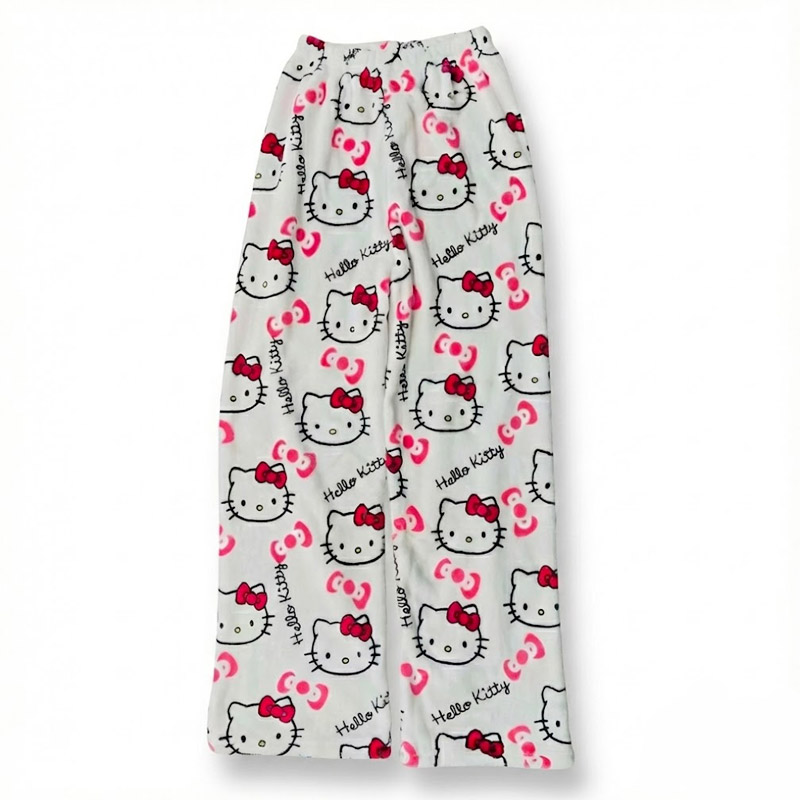
That’s also why I think the White Hello Kitty PJ Pants are worth mentioning here. The color white has its own calming properties, and when you combine that with the soft fabric and the familiar kawaii aesthetic, you get something that works on multiple sensory levels at once.
Why Adults Need This More Than Kids Do
Here’s a thought that changed my perspective: kids don’t need permission to enjoy cute things. They just do. It’s adults who build elaborate justifications for why they should stop. We tell ourselves we’ve outgrown it, that it’s childish, that we should be past this.
But the research says the opposite. Adults benefit more from kawaii than children do, precisely because adults carry more stress. A child’s nervous system is already relatively flexible. An adult’s is often locked into patterns of tension and overstimulation that take real effort to break. Kawaii provides a shortcut past some of those patterns.
I explored this idea more in the psychology of wearing cute clothes, and what I found was that the self-compassion aspect is huge. When you choose to wear something purely because it makes you happy, you’re making a small but meaningful statement that your comfort matters. That you deserve soft things. That joy is not something you have to earn.
That’s not escapism. That’s a radical act of self-care that happens to come in pink.
Building Your Own Kawaii Stress Relief
You don’t need to overhaul your entire life to benefit from this. Start small. Here are a few things I’ve found genuinely helpful:
Keep one kawaii item in your workspace. It doesn’t have to be big or obvious. A mug, a pen holder, a sticky note pad. Something you can look at when your brain feels fried. The visual cue alone starts the process of downshifting.
Make your sleep setup something you look forward to. This doesn’t mean buying new everything. It might mean getting one pair of pajama pants that you genuinely love wearing. The anticipation of putting them on becomes its own form of stress relief.
Give yourself permission to feel good about it. The biggest barrier to kawaii stress relief isn’t access. It’s shame. Once you stop apologizing for liking what you like, the benefits compound. You stop hiding your pleasure, and the pleasure gets stronger.
Notice how your body responds. Pay attention to what happens when you hold something soft and cute. The slight release in your shoulders, the slower breathing, the way your jaw unclenches. Once you start noticing it, you can use it deliberately.
The research is clear. Your experience backs it up. And honestly, the world has enough things that stress us out. If a cartoon cat on a pair of pajama pants gives your nervous system a break, that’s not a weakness. That’s resourcefulness.
Products to Check Out
Frequently Asked Questions
Does kawaii culture really reduce stress, or does it just feel that way?
Both, actually. The subjective feeling of comfort is real and valuable on its own. But there’s also measurable physiological change. Studies using brain imaging and skin conductance tests show that exposure to kawaii stimuli reduces cortisol levels and activates parasympathetic nervous system responses. Your body literally calms down, not just your mind.
I feel silly buying cute pajamas as an adult. Is that normal?
Extremely normal. Most adults who eventually embrace kawaii go through a phase of feeling awkward about it. The awkwardness usually fades once you experience the actual benefit. Think of it this way: nobody feels silly buying a bath bomb or a scented candle, and those serve the exact same purpose. Cute pajamas are just a more direct version of the same self-care.
Can kawaii help with insomnia or sleep problems?
Indirectly, yes. Kawaii pajamas won’t cure insomnia on their own. But by reducing overall stress and creating a calming bedtime ritual, they can lower the barrier to falling asleep. When you change into soft, pleasant pajamas, you’re creating a sensory trigger that tells your body it’s time to wind down. Over time, that trigger becomes stronger and more effective.
What if my partner doesn’t understand the kawaii thing?
You don’t need them to understand it. You just need them to respect it. If wearing Hello Kitty pajama pants helps you sleep better and feel calmer, that’s a net positive for the relationship. Most partners come around once they see how much it helps, even if they don’t share the aesthetic themselves.
Is there a difference between kawaii stress relief and regular self-care?
Kawaii stress relief is a specific subset of self-care that works through visual and tactile stimuli rather than, say, meditation or exercise. It’s particularly effective for people who find traditional self-care methods difficult or boring. If sitting still and breathing deeply makes you more anxious, kawaii might actually be a better entry point for building a self-care practice that sticks.