


 Shop
How to Wash Pajama Pants So They Stay Soft
There is a specific kind of disappointment that comes with pulling on a pair of pajama pants and finding that the plush surface you loved in December now feels thin and rough. Nothing is wrong with the pants. The damage came from a hot wash, an overloaded drum, or forty minutes in a dryer set to high. Brushed fleece lives on a surface texture that is easy to destroy and just as easy to protect.
What follows is the routine used on the fleece pants in our own rotation, including the temperature limits that matter for polyester and the small habits that add years to a pair you wear three nights a week.
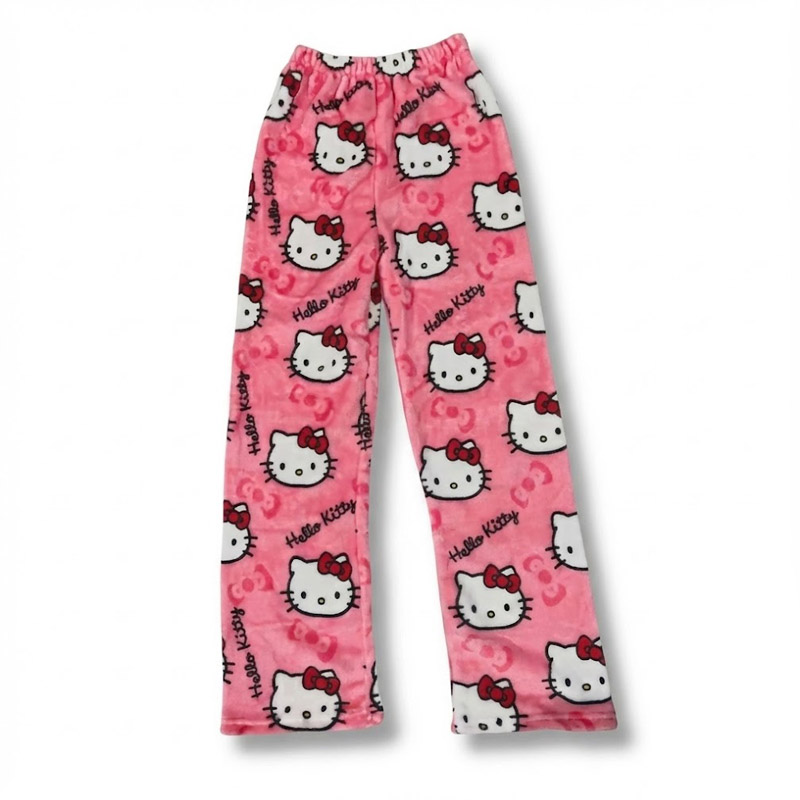
Brushed fleece keeps its nap when it never meets hot water or high dryer heat.
What Happens to Fleece Inside the Washing Machine
Most cozy pajama pants are made from a brushed fleece, typically a polyester and spandex blend. After knitting, the fibers are mechanically raised on both sides, which builds a downy surface full of tiny air pockets. Those pockets hold body heat, which is why the fabric feels warm the moment it touches your legs. That raised surface is also the most fragile part of the garment, and it does not recover on its own.
Four things flatten it. Heat above roughly 105 F softens polyester fibers and lets them mat together. Friction from a crowded drum grinds the nap down while the machine spins. Detergent that never rinses out leaves a film that stiffens the fibers once dry. Fabric softener and dryer sheets coat the surface in a waxy layer that feels slippery at first and scratchy after a few weeks.
Read the Care Label, Then Read It Again
Care symbols encode the maximum temperature the fabric was tested at. Ignoring them is the fastest way to ruin a pair.
Polyester fleece, plush, and fuzzy blends
Cold or cool water, never above 86 F, on a gentle cycle. Polyester is a thermoplastic fiber, so it responds to heat by deforming, and once the nap has melted flat it stays flat. Skip fabric softener entirely. The fibers are already soft, and softener only adds a coating that traps lint.
Cotton and flannel
Warm water is fine here, though cold protects color. The real risk is shrinkage and pilling, so use a short cycle and dry on low.
Thin knits, modal, and bamboo
Cold water and a mesh bag. These fabrics stretch out of shape in a drum. Lay them flat to dry instead of hanging them wet.
The Five Step Routine for Soft Pajama Pants
Nothing here requires special products, just the ordinary steps in the right order.
1. Turn them inside out. The raised surface of fleece takes the most abrasion, so turning the pants inside out moves the friction to the smooth side. It also lets water reach the skin side, where body oils collect.
2. Wash small loads. A drum packed to the top leaves no room for clothes to move, and clothes that cannot move rub against each other for the whole cycle. Keep pajama pants away from jeans, towels, and anything with a zipper.
3. Choose cold water and a gentle cycle. Cold protects the nap and the color, and the gentle cycle shortens the time the fabric spends being agitated.
4. Use less detergent than the bottle suggests. Two tablespoons of a free and clear liquid is enough for a small load. Extra detergent does not mean extra clean, it means extra residue, and residue is what makes fleece feel crunchy.
5. Skip the softener and add an extra rinse. A second rinse removes the detergent film that stiffens fibers. For scent, a few drops of essential oil on a wool dryer ball works without coating the fabric.
Drying Is Where Most Pairs Are Ruined
The washing machine is usually not the problem. The dryer is. High heat shrinks the spandex that gives the fabric its stretch and bakes the nap into a flat, felted surface. A pair of pants can survive twenty gentle washes and still be destroyed by five hot dryer cycles.
Shake the pants out, smooth the seams, and dry them on the lowest heat setting for twenty to thirty minutes, then pull them out while slightly damp and drape them over a chair. The last of the moisture evaporates on its own and the nap stays upright. Add two wool dryer balls for extra fluff, and never hang wet fleece by the waistband, since the weight stretches the elastic.
Pills, Fuzz, and Static
Pills form where friction is highest, usually between the thighs and along the waistband. A fabric shaver removes them in about a minute. Do not pull pills off with your fingers, since that drags more fibers loose and creates a bigger pill in the same spot. Static shows up in winter when indoor air is dry, and a wool dryer ball or a humidifier solves it without any chemical spray.
Stains and Odor Without Harsh Chemicals
Treat stains with cold water first, always. Hot water sets protein stains like food and sweat into polyester, and once that happens the mark is permanent. For grease, a drop of dish soap worked in with your fingers before washing lifts most of it. For colored stains, an oxygen based bleach is safe on polyester, while chlorine bleach yellows synthetics and weakens spandex.
Odor in fleece comes from body oils that cling to the fiber, not from bacteria alone, which is why a regular wash sometimes fails to fix it. Pretreat the inside with a little dish soap, let it sit ten minutes, then wash cold. Half a cup of white vinegar in the rinse neutralizes the smell without leaving a scent.
How Often Do Pajama Pants Actually Need a Wash
Every three to four wears is the practical answer for most people. Pajama pants sit against the skin for eight hours at a time, but they are not exposed to the outside world, so they hold up longer than a t-shirt. Wash more often if you sweat at night or wear them around the house during the day. Keeping two pairs in rotation is the simplest strategy, since it cuts washes per pair in half.
The fabric has to suit the room as well. Heavy brushed fleece is right for a cold bedroom and wrong for a warm house with a thick duvet. The comparison of fleece, flannel, and fuzzy materials covers which one breathes, and the guide on staying warm while sleeping without waking up sweaty handles the layering side.
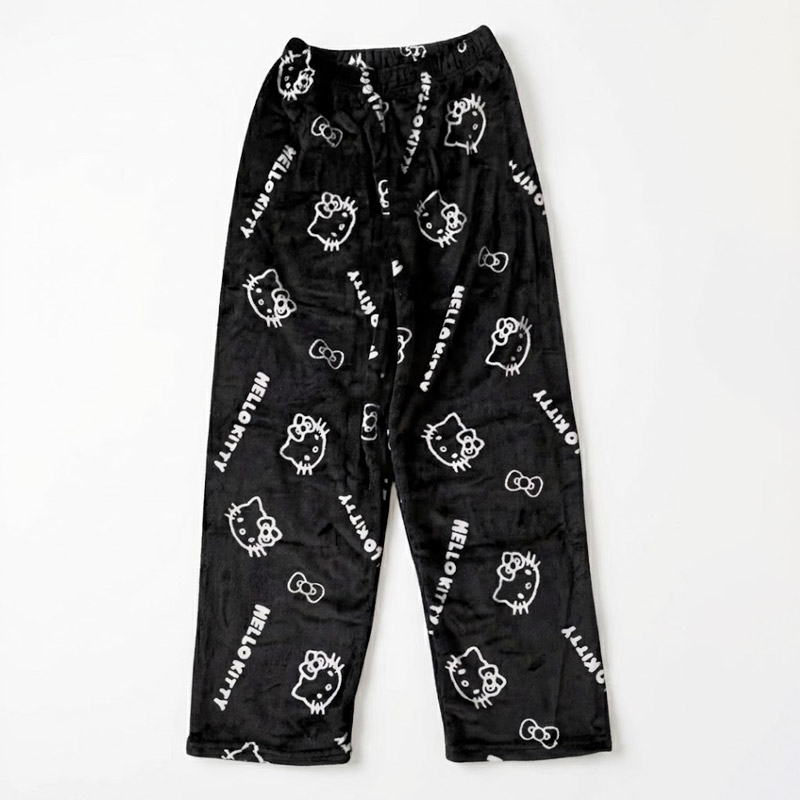
Laying fleece flat to finish drying keeps the waistband from stretching.
Cozy Pairs Worth the Care
Hello Kitty Fleece Pajama Pants
Brushed fleece in a classic pink print, the pair that rewards a cold wash with years of soft nights.
Black brushed fleece, fuzzy on both sides, and the pair most in need of the low heat rule.
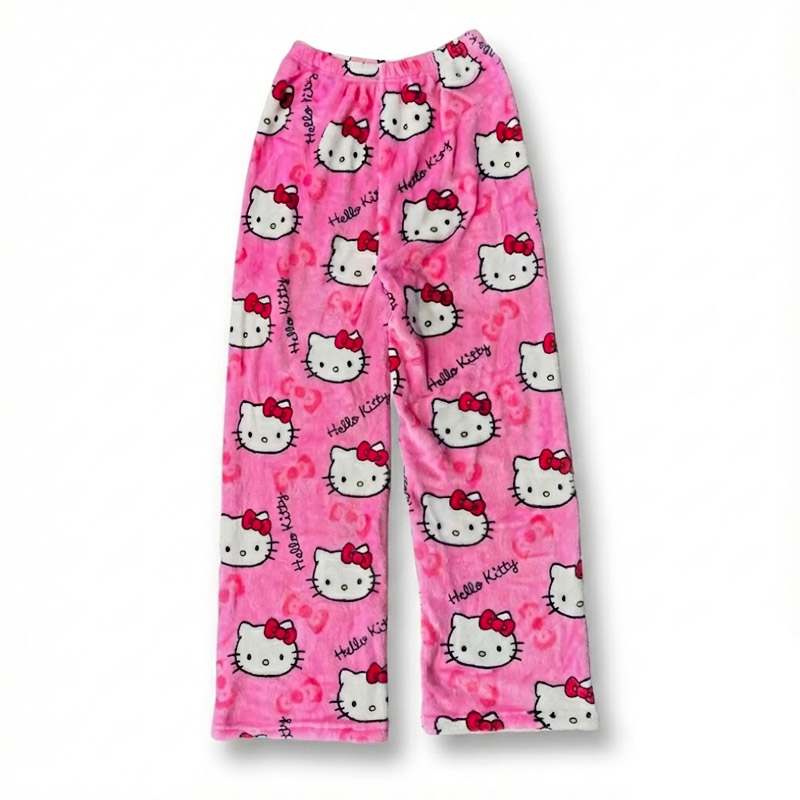
The everyday pink pair, easy to wash cold with the rest of your loungewear and quick to air dry.
All ship free and come in sizes XS through XL.
Frequently Asked Questions
Can fleece pajama pants go in the dryer?
Yes, but only on the lowest heat setting and only until they are mostly dry. High heat melts the polyester fibers that create the soft surface and can shrink the spandex. Twenty to thirty minutes on low, then finish air drying on a rack, is the safest routine.
Why do my pajama pants feel rough after washing?
The usual cause is detergent residue or fabric softener coating the fibers. Both leave a film that stiffens brushed fleece once it dries. Run the pants through an extra rinse with no detergent, skip the softener next time, and the nap usually comes back.
Is it okay to wash pajama pants with regular clothes?
They are best washed with other soft items like t-shirts and light knits. Denim, towels, and anything with zippers create friction that flattens the nap fast. If you are short on laundry, wash them in a mesh bag rather than mixing them with heavy fabrics.
How do you get the fuzz back on fleece pajama pants?
Once fleece has been felted by heat, the fibers cannot be raised again by washing. What helps is removing the matted pills with a fabric shaver, then washing cold and air drying. That restores the surface you can recover, though it will not rebuild fibers that melted in a hot dryer.
How should pajama pants be stored to stay soft?
Fold them loose in a drawer or hang them on a wide clip hanger. Compressing fleece into a tight stack for months flattens the nap, and damp storage invites a musty smell. Give the fabric room to breathe.