

 Shop
ShopHello Kitty: The History of Sanrio’s Most Iconic Character
There are a few characters in the world that almost everyone recognizes, even if they have never bought a single piece of merchandise. Mickey Mouse is one. Pikachu is another. And right up there with them sits a small white cat with a red bow and no mouth. Hello Kitty has been part of global pop culture for over fifty years, and her story is way more interesting than most people realize.
Whether you grew up with her on your school supplies or discovered her as an adult through a pair of cozy pajama pants, Hello Kitty has a way of showing up in your life at exactly the right moment. This is the story of how a simple character sketch on a vinyl purse became one of the most recognizable faces on the planet.
Where It All Started: Japan, 1974
Hello Kitty was designed by Yuko Shimizu, an artist working for Sanrio, a company that made small gift items and stationery. In 1974, Sanrio needed a character for a line of kids’ purses, and Shimizu drew a white cat with a bow, sitting upright, with her mouth conspicuously absent. The character was named “Hello Kitty” after the English phrase on the purse she first appeared on.
That purse sold well, but nobody at Sanrio could have predicted what came next. By the late 1970s, Hello Kitty was on everything from pencil cases to lunchboxes to backpacks. Sanrio understood something that many companies still struggle with: a character is not just a drawing. It is a feeling. Hello Kitty represented warmth, friendliness, and a kind of gentle optimism that appealed to kids and parents alike.
Shimizu left Sanrio in 1976, and the character’s design was taken over by Yuko Yamaguchi, who has been the primary Hello Kitty designer ever since. Yamaguchi has said in interviews that she sees Hello Kitty as a character who listens without judging, which is exactly why she has no mouth. That design choice, which might seem like a minor detail, turned out to be one of the smartest branding decisions in history. People project their own emotions onto Kitty, which makes her feel personal to everyone.
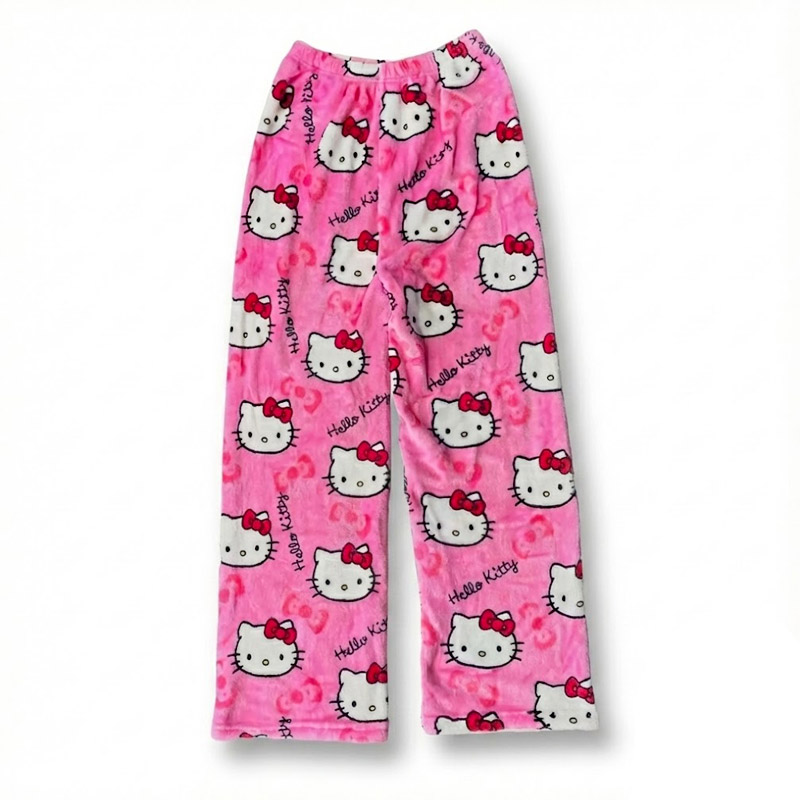
The classic Hello Kitty design translated perfectly into loungewear
Going Global: From Tokyo to the World
The first big international push came in 1976, when Hello Kitty arrived in the United States. Sanrio opened its first American store in 1984, and by the mid-1980s, Kitty was everywhere. She was on stationery, toys, clothing, and accessories. American kids who had never heard of Sanrio knew exactly who Hello Kitty was.
What made the American expansion work was that Sanrio did not try to change the character. They kept her Japanese, kept her simple, and let the design speak for itself. That authenticity turned out to be a huge advantage. In a market flooded with characters that felt manufactured and focus-grouped, Hello Kitty felt genuine.
Through the 1990s and 2000s, Hello Kitty continued to grow. She appeared in video games, animated series, and theme parks. Sanrio opened dedicated Hello Kitty cafes and airports. In 2014, she was appointed Japan’s tourism ambassador, a role that recognized her status as one of the country’s most important cultural exports.
The Misconceptions That Won’t Die
One of the most persistent myths about Hello Kitty is that she is a cat. She is not. Sanrio has officially stated that Hello Kitty is a young girl named Kitty White who lives in a London suburb with her family. She has a twin sister named Mimmy, a pet cat named Charmmy Kitty, and a grandfather named George White who emigrated from the United States. The character sits like a cat, looks like a cat, and shares a name with a common word for cat, but according to Sanrio, she is a human girl.
Another popular misconception is that her lack of a mouth means she is unhappy or repressed. In reality, the opposite is true. Yamaguchi has explained that Kitty’s blank expression allows her to mirror the emotions of the person looking at her. If you are happy, she looks happy. If you are sad, she looks like she understands. It is a remarkably effective piece of character design, and it is a big part of why people form such strong emotional connections to her.
There is also the long-running internet theory that Hello Kitty is a yakuza tattoo. While she does appear in Japanese tattoo culture, there is no official connection between Sanrio and organized crime. The character’s popularity in tattoo art is simply a reflection of how deeply she has penetrated Japanese culture at every level.
Why Hello Kitty Has Lasted When Others Faded
Fifty years is a long time for any character to stay relevant. Most characters from the 1970s are either forgotten or clinging to nostalgia. Hello Kitty is neither. She is still generating billions of dollars in revenue, still appearing in new collaborations, and still finding new audiences. The question is why.
One reason is simplicity. Hello Kitty’s design is easy to reproduce, easy to recognize, and easy to adapt. She works on a pencil case, a phone case, a designer handbag, and a pair of pajama pants. That versatility means she can show up in almost any product category without looking out of place.
Another reason is emotional resonance. Hello Kitty does not have a complicated backstory or a dramatic storyline. She is just there, looking friendly and approachable. That makes her a blank canvas for people’s own feelings and memories. Adults who loved her as kids feel a genuine connection when they see her as grown-ups, and that nostalgia is powerful.
Sanrio has also been smart about collaborations. From high-end fashion brands to fast-food chains, Hello Kitty has partnered with companies across every price point and market. Each collaboration introduces her to a new audience while reinforcing her presence with existing fans. The result is a character that never feels stale.
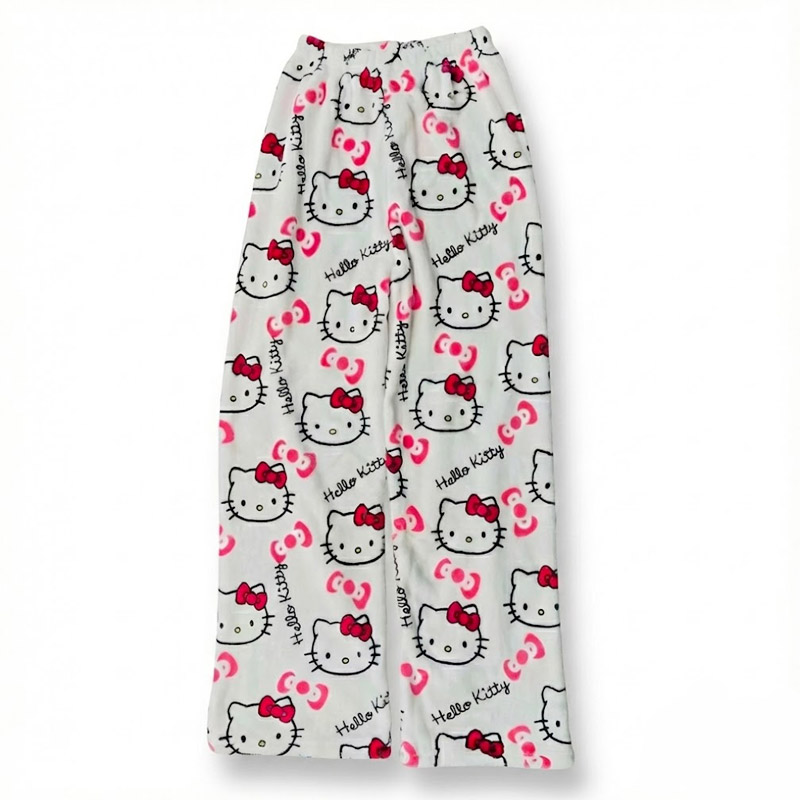
A minimalist take on the classic character for everyday comfort
Hello Kitty as an Adult Fan
For a long time, loving Hello Kitty was considered something you outgrew. That stigma has completely disappeared. Today, adult Hello Kitty fans are everywhere, and they are proud of it. The reason is straightforward: liking a character that brings you joy has nothing to do with age.
Adult fans often gravitate toward items that blend the character with grown-up functionality. A pair of Hello Kitty pajama pants, for example, is not just merchandise. It is a way to bring something that makes you happy into your everyday routine. Wearing something cute to bed is not childish. It is a choice to surround yourself with things that feel good.
The rise of kawaii culture globally has also helped. What was once dismissed as a niche Japanese interest is now mainstream. People wear character-themed clothing to work, to brunch, and to bed without a second thought. Hello Kitty, as the original kawaii icon, benefits from this cultural shift more than almost any other character.
Products to Check Out
If the history of Hello Kitty has you feeling nostalgic, or if you just want to bring a little more character into your downtime, these pajama pants are a great place to start.
The classic pink design featuring Kitty’s signature bow. Soft, comfortable, and perfect for anyone who grew up with her.
A cleaner, more minimalist version of the same beloved character. Great for anyone who prefers a subtler look.
All ship free and come in a range of sizes.
Frequently Asked Questions
When was Hello Kitty first created?
Hello Kitty was designed in 1974 by Yuko Shimizu for Sanrio. She first appeared on a vinyl purse sold in Japan, and quickly expanded into stationery, toys, and clothing. By the early 1980s, she was a household name across Asia and had begun her expansion into the United States and Europe.
Is Hello Kitty actually a cat?
According to Sanrio, no. Hello Kitty is a human girl named Kitty White who lives in London. She has a pet cat named Charmmy Kitty, which adds to the confusion, but the official character biography describes her as a young girl, not an animal. The debate continues among fans, but Sanrio’s position has been consistent since the character’s early years.
Why does Hello Kitty not have a mouth?
The designer Yuko Yamaguchi has explained that Kitty’s blank expression allows people to project their own emotions onto her. If you are happy, she looks happy. If you are having a tough day, she looks like she understands. This design choice is one of the reasons the character has such broad emotional appeal across different cultures and age groups.
How much revenue does Hello Kitty generate?
Estimates put Hello Kitty’s annual licensing revenue in the billions of dollars. She appears on thousands of products worldwide, from budget stationery to high-end fashion collaborations with brands like Balenciaga and Tiffany and Co. Sanrio has built one of the most successful character licensing operations in history around her image.
Why do adults still love Hello Kitty?
For many adults, Hello Kitty represents a connection to childhood that feels genuine and uncomplicated. She does not carry the baggage of a complicated storyline or edgy reboot. She is just a friendly character that has been consistently present in people’s lives for decades. Wearing Hello Kitty pajamas or displaying her items is a way to keep that connection alive without apology.